
Ultimate Guide to Driving in Japan as a Tourist 🚗🇯🇵
Everything you need: documents, rental prices, tolls/ETC, parking, fuel, rules, and real-life tips.
Quick answers
- Can tourists drive in Japan? Yes — with a valid 1949 IDP or a Japanese translation depending on your issuing country.
- Is driving difficult for Europeans? Usually not. The main adjustment is left-hand driving and narrow streets in older areas.
- Is renting a car worth it? Yes, outside major cities. In central areas of Tokyo, Osaka, and Kyoto, trains and subways are often more convenient. However, in regions such as Okinawa, Kyushu, or Hokkaido, renting a car is almost mandatory, as buses and trains are much less frequent.
If your country requires a Japanese translation, we can deliver a JAF-compliant translation quickly. Start your order on the homepage.
Get my official translation
Documents checklist before you fly
Here’s the quick “did I forget anything?” list for European tourists wanting to drive in Japan:
- ✅ National driving licence (valid, not expired, full licence)
- ✅ 1949 IDP or Japanese translation (depending on your country)
- ✅ Passport
- ✅ Credit card for rental deposit and toll settlement
- ✅ First hotel’s address & phone number in Japan (often required on forms)
- ✅ Travel insurance that covers rental cars & third-party liability
- ✅ Offline maps (Google Maps offline + one backup app)
- ✅ If travelling with kids: check child seat rules (child seats are mandatory under 6)
Rental car companies in Japan (with price ranges)
Most rental agencies are extremely professional, with new, clean cars. English levels vary, but in tourist areas you’ll usually be fine.
2.1 Big national chains
- Toyota Rent a Car – Massive network, lots of hybrids, very reliable. Great for airport pick-ups and one-way rentals.
- Nippon Rent-A-Car – Common in big cities and near stations. Often decent English support.
- Times Car Rental – Large network, often good prices, easy online booking.
- ORIX Rent a Car – Competitive pricing; small cars often start around ¥6,000–¥7,000/day (around 35€) off-peak.
- Nissan Rent-A-Car – Good if you like Nissan models; comfortable for highway driving.
- Budget / Avis / Hertz – Present but less dominant; often run in partnership with local operators.
2.2 Budget & regional agencies
- OTS Rent-A-Car – Very popular in Okinawa and Hokkaido; lots of tourists, good English support.
- NICONICO Rent a Car – Budget-friendly, especially outside of mega-cities. Good if you’re flexible and want to save.
- Local independents – Sometimes cheaper, but English may be minimal and rules can be stricter. Read reviews.
2.3 Where to book for the best rates
- Online comparison tool that checks all rental agencies in Japan at once and finds the best rates: https://www.discovercars.com/
- Direct websites of Toyota, Nippon, Times, Orix, etc. (often have English version).
- Booking platforms like Rakuten Travel, Jalan, or ToCoo! which sometimes bundle ETC cards and expressway passes.
- Compare airport vs city pick-up: airport is convenient but can be slightly more expensive.
Car types, realistic daily prices & how to save money
These numbers are typical 2026 prices in yen for European tourists booking a month or more in advance (low to normal season):
| Car type | Example models | Typical daily price | Best for |
|---|---|---|---|
| Kei car (軽自動車) | Nissan Dayz, Honda N-Box | ¥5,000–¥7,000 (27-38€) |
Solo / couple, very narrow streets, cheap parking & tolls |
| Sub-compact | Toyota Yaris, Honda Fit | ¥8,000–¥9,000 (44-50€) |
2–3 people, small luggage, mixed city & countryside |
| Compact / mid-size | Corolla, Prius, Note | ¥10,000–¥14,000 (55-77€) |
3–4 people with luggage, longer distances |
| Minivan / MPV | Serena, Noah, Stepwgn | ¥12,000–¥18,000 (66-99€) |
Families or groups, ski trips, lots of luggage |
| SUV | RAV4, CX-5 | ¥13,000–¥20,000 (71-110€) |
Mountains, winter, premium comfort |
Hidden costs to watch out for
- Insurance upgrades: CDW is often included; “Non-Operation Charge” (NOC) waivers and roadside assistance can add around ¥1,100–¥2,000/day.
- One-way fees: Dropping off the car in another prefecture can cost anywhere from ¥3,000 to over ¥30,000 depending on distance.
- Seasonal surcharges: Golden Week, Obon, New Year, and Hokkaido summer often have higher base rates.
- Snow tyres & chains: Sometimes included in winter, sometimes extra – check the quote.
- ETC card rental: Some agencies charge separately for the ETC card (device is usually installed).
- Extra drivers: Some agencies charge for additional drivers—check before pickup.
Concrete money-saving tips
- Don’t oversize the car. A compact hybrid is usually enough and cheaper on fuel, tolls, and parking.
- Design a loop itinerary (start/finish same city) to avoid high one-way drop-off fees.
- Use regional expressway passes where possible (Hokkaido, Tohoku, Kyushu, central Japan).
- Book in advance for peak season – walk-in rates during holidays can be painful.
- Share the car: tolls and parking are per vehicle, so 3–4 people in one car dramatically reduces per-person cost.
- Compare routes with tolls vs no tolls in Google Maps—sometimes +20 minutes saves a lot.
If you’ll drive in cities at all, plan your day so you park once and walk/metro the rest. Parking is often the hidden budget killer.
Japanese cars are often narrower than European ones. If you’re 3–4 adults with big check-in suitcases, space will be tight. Consider sending 1–2 big bags ahead to your next hotel so you can rent a smaller, cheaper car and still be comfortable.
Road rules & etiquette that surprise Europeans
4.1 Core rules
- Drive on the left; steering wheel is on the right.
- Seatbelts mandatory for everyone.
- Child seats required for under-6s.
- Speed limits (typical):
- Urban: 30–40 km/h
- Rural: 50–60 km/h
- Expressways: 80–100 km/h (some new sections 110 km/h)
4.2 Alcohol & phone rules
- Legal blood alcohol limit: 0.03% – practically zero. The safest rule is simple: don’t drink at all if you drive.
- Passengers can also be in trouble if they knowingly ride with a drunk driver.
- No handheld phone use while driving. Fines are serious and police don’t joke about it.
4.3 Polite driving culture
- Very little honking, minimal aggressive behaviour, almost no tailgating compared to many European countries.
- Drivers often flash hazard lights 2–3 times to say “thank you” when you let them in. Do the same.
- On narrow mountain roads, drivers often slow down or pull over to make space. Copy this behaviour.
- Most people reverse into parking spaces instead of going nose-first.
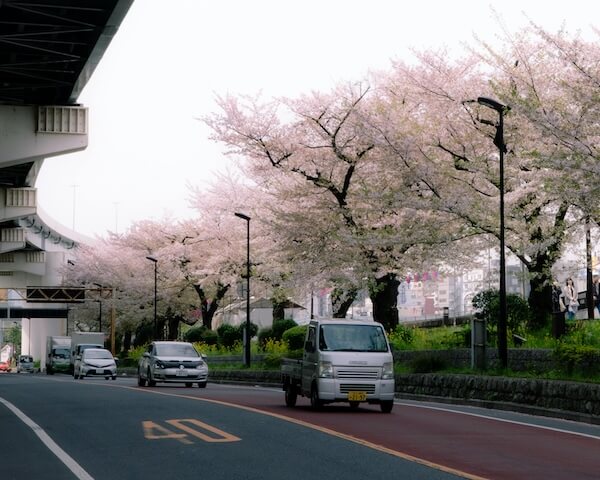
Highways, tolls, ETC & expressway passes
Japan’s expressways are excellent—smooth, safe, and well signed—but they are not cheap. Think of them as a high-speed train for your car: fast, convenient, and priced accordingly.
ETC: how tolls become painless
ETC (Electronic Toll Collection) is Japan’s electronic toll system. Most rental cars already have the ETC reader installed.
- You rent an ETC card from the rental company (typically ¥300–¥500 -1,60€-2,70€) for the rental period).
- Insert the card into the ETC reader in the car.
- At toll gates, use lanes marked ETC or ETC / 一般 and drive slowly through.
- Tolls are recorded automatically and paid at the rental counter when you return the car.
- Confirm that the ETC reader is installed and powered on.
- Ask whether the ETC card is included or rented separately.
- Check how tolls are billed (pay at return vs post-rental charge).
- Make sure you know which lanes to use at toll gates.
Rough toll costs (realistic examples)
These are approximate but realistic ranges for common tourist routes:
- Regional driving with frequent expressway use: ¥3,000–¥8,000 per day.
- Tokyo → Mt Fuji (Kawaguchiko): around ¥2,000–¥3,000 one way.
- Tokyo → Kyoto: typically ¥10,000+ one way, depending on route and discounts.
Expressway passes for tourists
Several regions offer flat-rate expressway passes for foreign tourists. These are usually linked to an ETC card and can save a lot if you plan to drive extensively.
- Hokkaido Expressway Pass – unlimited expressway use in Hokkaido.
- Tohoku Expressway Pass – covers Japan’s north-east region.
- Central Nippon / NEXCO passes – areas like Nagoya, Gifu, Nagano.
- Kyushu Expressway Pass – unlimited use in Kyushu (3 / 5 / 7 days).
Rule of thumb: if your plan is “drive everywhere for several days” (especially in Hokkaido or Kyushu), an expressway pass is almost always cheaper than paying tolls individually.
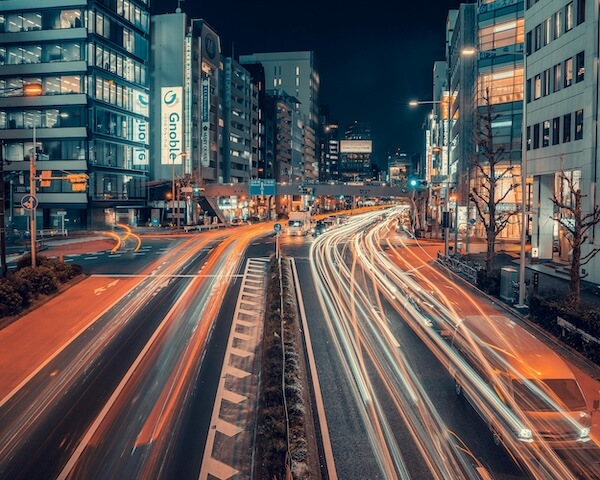
Fuel, EVs & how much you’ll spend on petrol
6.1 Petrol prices in Japan (beginning 2026)
As of beginning 2026, regular gasoline in Japan is hovering around ¥170–¥175 (1€ environ) per litre on average.
- Hybrid rentals are super efficient: 18–25 km/L is normal.
- For a 7-day, 900 km trip in a hybrid, expect roughly ¥6,000–¥9,000 (33-55€) in fuel.
6.2 How to refuel without drama
- Red pump = Regular (what you want in 99% of cases).
- Yellow pump = High octane.
- Green pump = Diesel.
- Look for
セルフ(self-service) on station signs if you prefer to pump yourself. - Many stations accept credit cards, but having some cash is always smart.
6.3 EVs & charging
EV infrastructure (CHAdeMO fast charging) exists, especially around cities and major routes, but for tourists it’s still less convenient than petrol.
- Ask the rental agency for a charging map or recommended apps if you insist on renting an EV.
- For most European tourists, a hybrid is the sweet spot between eco and stress-free.
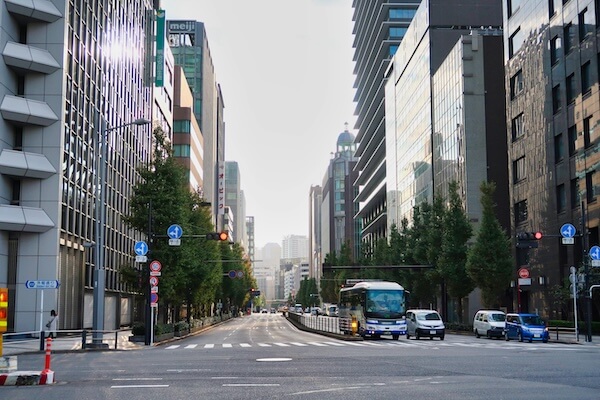
Parking in Japan: costs, traps & how not to get fined
7.1 What parking actually costs
- Small town / countryside: often ¥100–¥200 per 30 min (0.55-1.10€), capped at ¥600–¥1,000/day (3-5.5€).
- Big cities (Tokyo, Osaka, Kyoto): ¥200–¥400 per 20–30 min (1.10-2.20€), capped at ¥1,500–¥3,000/day (8-16.5€).
- Tourist hot spots and weekends can be more expensive and fill up early.
7.2 Parking formats you’ll see
- Coin parking lots – open-air, numbered spaces, pay at a machine before leaving.
- Locking plate systems – a plate under the car rises to lock your wheels until you pay.
- Multi-storey & mechanical parking – attendants may park your car on a lift system.
- Hotel parking – free in many countryside hotels, but often ¥1,000–¥2,000/night (5.50-11€) in cities.
7.3 Street parking: just don’t
- On-street parking is heavily regulated in most cities.
- Parking “just for a few minutes” in the wrong place can earn you a fine (often starting around ¥10,000- 55€ ).
- Use convenience store car parks or proper parking lots for short stops.
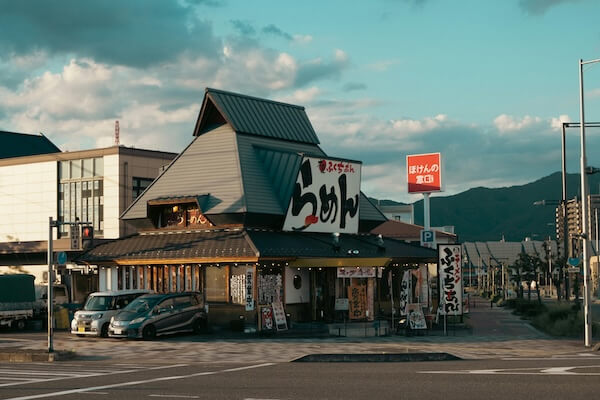
Where it’s fun to drive (and where it’s not)
8.1 Amazing regions for a road trip
- Hokkaido – wide roads, less traffic, national parks, ski resorts. Very beginner-friendly.
- Okinawa – beach hopping paradise; easy driving and common rentals.
- Kyushu – volcanoes, hot springs, scenic drives like the Yamanami Highway.
- Tohoku – lakes, mountains, fewer tourists, super relaxed driving.
- Fuji Five Lakes / Hakone – iconic Mount Fuji views; best outside peak weekends.
8.2 Places where driving is more pain than pleasure
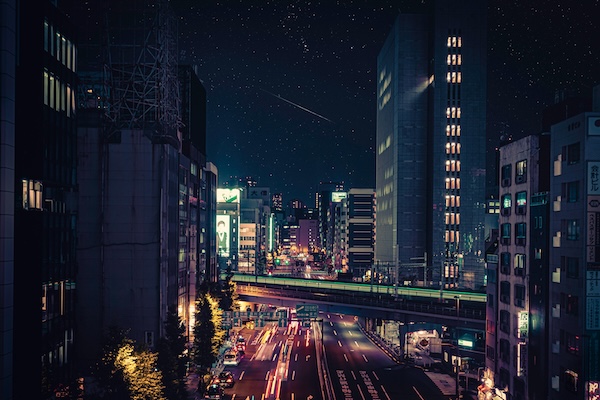
- Central Tokyo – traffic, complex junctions, expensive parking. Public transport is simply better.
- Osaka city – more aggressive driving style, messy elevated expressways.
- Central Kyoto – narrow streets, many pedestrians, limited and pricey parking.
Strategy: use trains inside megacities, then rent a car only for the “road trip section” of your itinerary.
7-day real-life budget for a road trip (example)
Example: 2–3 people, compact hybrid, mix of highways & local roads:
- Car rental (7 days, compact hybrid): ~¥70,000 (385€)
- Tolls: ¥15,000 (82€)
- Fuel (~900 km): ¥7,500(41€)
- Parking: ¥8,000–¥12,000 (44-66€)
- Insurance extras: ¥5,000–¥10,000 (27-55€)
Total ballpark: ¥105,000–¥115,000 for 7 days (~650€–720€). If you’re 3 people, that’s roughly €30–€40 per person per day for full freedom and flexibility.
30 concrete micro-tips from locals & expats
- Photograph your licence, IDP, and passport and store them in the cloud.
- Use English navigation but keep Japanese place names visible so you can match signs.
- Always carry some coins and ¥1,000 notes for parking and small stations.
- Learn a few key kanji: 出口 (exit), 入口 (entrance), 有料 (paid), 無料 (free).
- In locking plate car parks, don’t try to drive off until the plate has dropped after payment.
- Check hotel parking before booking – in cities this can easily save you ¥2,000 (11€) per night.
- Use convenience stores (7-Eleven, Lawson, FamilyMart) for quick, safe stops and toilets.
- Watch for deer and wildlife at night in Hokkaido and rural mountain areas.
- Don’t trust a single navigation app; tunnels and mountains can confuse GPS.
- Take note of toll totals if you’re splitting costs among friends.
- In winter, double your time estimates; snow and ice slow everything down.
- At staffed gas stations, say: “Regular mantan onegaishimasu” (full tank of regular).
- When you’re lost, pull into a konbini car park to check maps rather than stopping on the roadside.
- Expect bicycles in narrow streets sometimes going the “wrong” way.
- Stop for pedestrians at zebra crossings – people expect it and it’s the law.
- Check mirrors carefully before changing lanes; bikes and scooters can appear quickly.
- Don’t stop on yellow grid markings at intersections; fines are possible.
- Many in-car GPS units let you enter a destination’s phone number instead of the address.
- Take photos of the car at pick-up and drop-off for peace of mind.
- Save your rental company’s emergency number in your phone and keep it in the glove box too.
- If a police car has lights on but no siren, they’re often just patrolling – don’t panic.
- At some rural level crossings you must come to a complete stop even if no train is visible.
- Use highway service areas (SA/PA) for food, toilets and rest – they’re clean and convenient.
- Avoid driving straight after a long-haul flight if you’re destroyed by jet lag.
- In busy tourist towns, park once and walk or use local buses rather than moving the car all day.
- Keep a small trash bag in the car; public bins are surprisingly rare.
- In heavy rain on expressways, some drivers briefly turn on hazard lights when slowing down; copy the pattern.
- Take photos of your parking space and the car park sign so you can find it again easily.
- Remove the ETC card when returning the car so you don’t forget it.
- Most important: copy local driving style – calm, predictable, polite, slightly slower than you’re used to.
FAQ – driving in Japan as a European tourist
Do I really need an International Driving Permit to drive in Japan?
Yes. Unless your licence is from a country that can use a Japanese translation (Germany, France, Switzerland, Belgium, Monaco, Taiwan), you must have the 1949 IDP plus your national licence.
Can I drive with just my EU plastic licence?
No. Rental companies and police will require a valid IDP or, for some countries (Germany, France, Switzerland, Belgium, Monaco, Taiwan), a JAF translation of your licence.
Is driving in Japan difficult for Europeans?
The left-hand traffic and narrow streets are the main differences, but drivers are polite and speeds are low. If you’re comfortable driving in the UK or Ireland, you’ll adapt very quickly.
What’s cheaper: driving or taking the train?
For solo travellers, Shinkansen and passes can be cheaper and faster. For 2–4 people exploring countryside areas with many stops, a rental car is often cheaper and far more flexible.
How do I pay tolls?
Most tourists rent an ETC card with the car. You drive through ETC lanes, then pay all tolls together at the rental counter when you return the vehicle.
Can I sleep in my car?
Many locals “car camp” at highway service areas or roadside stations. It’s generally tolerated, but keep a low profile (no BBQ in the parking lot) and follow local rules.
Are there speed cameras and police checks?
Yes. There are fixed and mobile cameras and occasional patrols. Fines and penalties can be severe for serious speeding. It’s not worth trying your luck.
Do rental cars have English GPS?
Some do, especially in tourist-heavy regions. If not, you can use your phone as main navigation and treat the in-car GPS as backup using phone numbers or map codes.
Is winter driving safe for tourists?
Roads in snowy regions are well maintained, but snow and ice demand experience and patience. If you’re not confident, consider trains or limit winter driving to flatter regions.
How far in advance should I book my rental car?
For peak seasons (Golden Week, summer in Hokkaido, New Year), aim for at least 1–2 months in advance. For normal periods, a couple of weeks is usually enough.